By: Carla Möller
This year marked Copenhagen Fashion Week’s 20th anniversary. A milestone that reflects far more than longevity. What began as a small, community-built stage has evolved into fashion’s unofficial fifth city, recognised not for spectacle alone, but for its ability to turn sustainability from conversation into measurable action.
Unlike many major Fashion Weeks, Paris, Milan, New York and London, where sustainability initiatives often exist as side events or optional showcases, Copenhagen has embedded responsibility into the core of its fashion ecosystem. Its reputation is built on accountability, collaboration, and a clear understanding that real change requires structure, not symbolism.
One of the most defining moments in Copenhagen Fashion Week’s sustainability journey was the introduction of mandatory minimum standards. CPHFW gave brands three years to meet 18 non-negotiable criteria, ranging from the banning of plastic hangers to regulations on textile composition and sourcing, or face removal from the official schedule. However, following greenwashing allegations[1], CPHFW reiterated that these are merely guidelines and that the brands showcased are not guaranteed to be pioneers within the sustainable fashion movement. Nonetheless, this level of enforcement is one that would remain controversial and uncomfortable in Paris or Milan. It is this exact bold move that shifted sustainability from a branding exercise to a prerequisite, setting an example few other global Fashion Weeks have yet matched.
The week’s events further reinforce this commitment to long-term impact:
- The Climate Pledge Reception brought together Fashion Week partners, members of The Climate Pledge community, and crucially, the Danish policymaking sector. This convergence proves that sustainability is not treated as an industry-only concern, but as a shared societal responsibility. By encouraging dialogue between creatives, corporations, and lawmakers, the event moves beyond awareness toward tangible legislative change.
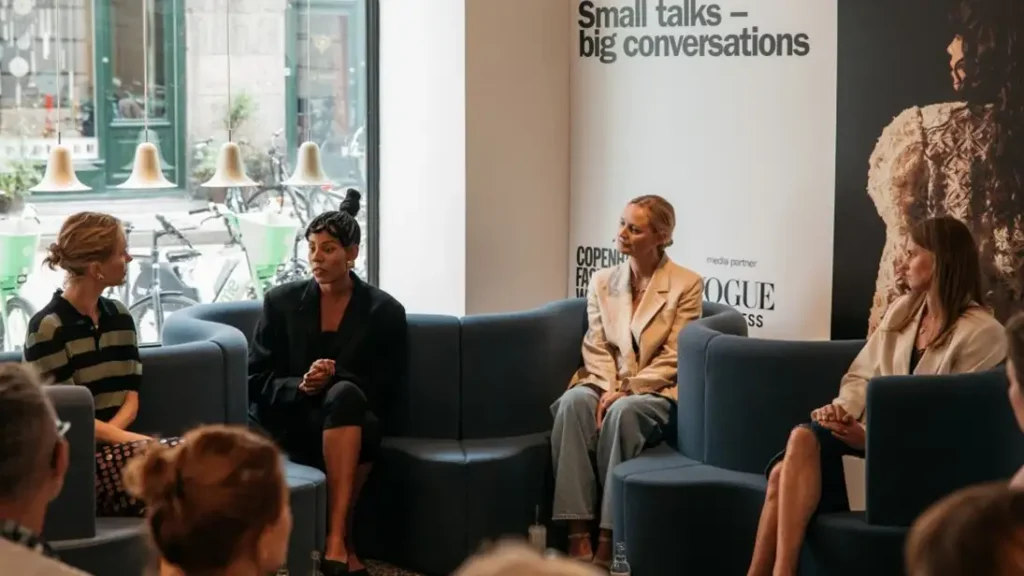
- The Wear and Care Talk, hosted in collaboration with Vogue Business, focused on longevity in fashion. From garment construction to life after use, the series highlighted the full journey of clothing. Addressing not only how we produce, but how we preserve. It fosters a deeper consciousness around consumption while celebrating design creativity rooted in intention rather than excess.
Where other Fashion Weeks often prioritise scale, celebrity, and commercial momentum, Copenhagen places value on durability on all levels – from the garments, systems, and cultural relevance. Attendees consistently applaud the city’s ability to balance innovation with responsibility, proving that fashion can be aspirational without being wasteful.
Copenhagen Fashion Week’s success lies in its refusal to separate sustainability from fashion itself. By setting clear standards, allowing brands time to adapt, and backing principles with consequences, it demonstrates that real change in fashion is not only possible but achievable when commitment is collective and enforced.
Interested in gaining a deeper, first-hand perspective on the Fashion Week’s sustainability framework? Clare Press’s The Wardrobe Crisis podcast features an in-depth interview with CPHFW CEO, Cecilie Thorsmark, discussing policies, accountability, and realities of implementing long-term change within the fashion system:
The Wardrobe Crisis, Episode 154: Copenhagen Fashion Week – Cecilie Thorsmark.
[1] Anna Roos van Wijngaarden, “No further action in Copenhagen Fashion Week greenwashing case,” FashionUnited, September, 23, 2025, https://fashionunited.com/news/fashion/danish-regulators-final-verdict-copenhagen-fashion-week-is-not-greenwashing/2025092368364