By Katie Kendrick
Three years ago, I launched a small initiative at the further education college where I work: a clothing swap shop. What began as a local project to educate students on the environmental toll of fast fashion has since grown into a thriving community movement. It has been a privilege to show the next generation that “preloved” isn’t just a budget-friendly alternative—it is the most stylish and sustainable choice we can make.
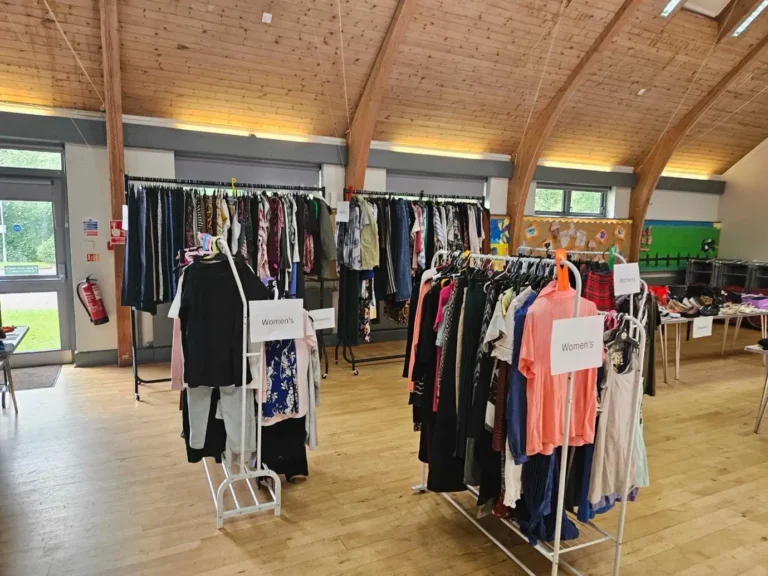
Building on that success, I decided to take the project beyond the campus gates and into the heart of my local town. With the support of family and friends, I have now hosted three community-wide swaps. To date, we have diverted nearly 1,500 items of clothing from landfill, proving that the appetite for a circular fashion economy is stronger than ever.
The Power of the Community Swap
On a global scale, the fashion industry is a major polluter, but the solution can start locally. These events offer a “triple win” for our society:
- Environmental Restoration: We are directly tackling textile waste. The sheer volume of clothes we collect is a stark reminder of how much we over-consume, store, and eventually discard.
- Economic Resilience: Amidst a global cost-of-living crisis, providing a dignified way for people to refresh their wardrobes for free is a vital community service.
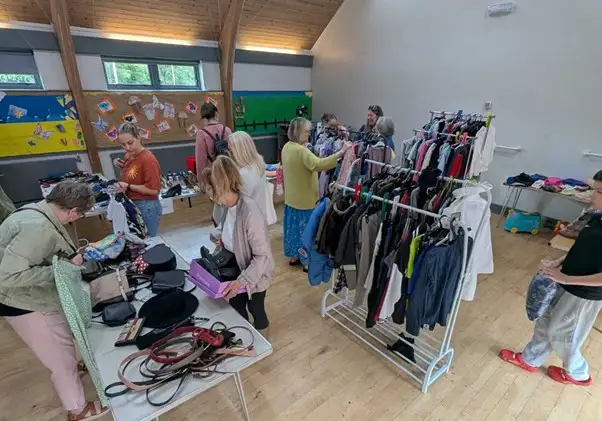
- Social Connection: By partnering with local venues and supermarkets for refreshments, we’ve transformed “shopping” into a social experience. It’s a space where people connect, share stories, and celebrate their “new” finds over a cup of tea.
The Hidden Cost of Fast Fashion
- The Water Footprint: It takes approximately 2,700 litres (700 gallons) of water to produce one cotton T-shirt—enough for one person to drink for 900 days.
- The Carbon Cost: The fashion industry is responsible for 10% of global carbon emissions, more than all international flights and maritime shipping combined.
- The Waste Pile: Globally, an estimated 92 million tonnes of textile waste are generated every year. That is the equivalent of a rubbish truck full of clothes being landfilled or burnt every single second.
The Good News: We are Turning the Tide
While the environmental stats are tough to hear, the tide is officially turning. The “pre-loved” movement is no longer niche; it’s becoming the new global standard:
- Growth Speed: The global second-hand apparel market is growing 2.7 to 3 times faster than the overall apparel market. By 2029, it is projected to reach a staggering value of $367 billion (approx. £290 billion GBP).
- The “First Choice” Shift: In a major cultural shift, 56% of Gen Z and Millennial shoppers now look for second-hand options before they even consider buying something new.
- The “Resale” Habit: As of 2025/2026, over 59% of consumers shop second-hand specifically to maximize value and combat rising costs, proving that “thrifting” is now a mainstream financial strategy.
- UK Leading the Way: The UK is currently ranked as one of the top global growth regions for second-hand fashion, with British shoppers identified as some of the most active “recommerce” participants in the world.
My Blueprint for a Successful Event
If you are passionate about reducing waste and supporting your neighbours, here is how we keep our events running like a dream:
1. Radical Simplicity
While some swaps use complex token systems, I prefer an open model: Bring what you want, take what you need. We typically allow attendees to take up to 20 items. Despite this generosity, we have never run out of stock—a testament to the massive surplus sitting in our wardrobes.
2. The “Live Sorting” Method
To maintain quality and accountability, we set up a Donation Station at the entrance. Our volunteers sort and hang items during the event. Engaging with donors face-to-face ensures that the clothes brought in are high-quality, clean, and ready for a second life.
3. Measuring the Impact
Data is a powerful tool for advocacy. We count every item as it leaves the building. Being able to report exactly how many garments were saved from landfill is essential when pitching for venue support or community funding.
4. Creating a “Social Hub”
A swap should be an event, not just a transaction. We always provide a separate space for refreshments. This fosters a genuine community vibe, allowing people to bond over sustainable fashion and local activism.
5. Starting Small and Scaling Up
My first event relied on a small stock of items from friends and family. You don’t need a huge budget; my only real investment was purchasing sturdy rails and dividers to ensure the clothes were displayed in an organised, inviting way.
The Reality Check
It isn’t always perfect. A tiny minority of items arrive damaged or stained, which I personally take to the textile recycling centre. However, this is a small price to pay for the immense positive impact these events have on our planet and our people.
If I can do this, anyone can. Whether you are a student, a teacher, or a concerned citizen, you have the power to turn the tide on textile waste. It just takes a bit of passion, a few clothes rails, and a desire to see your community thrive.
The future of fashion isn’t sitting in a shop window; it’s already hanging in our wardrobes, waiting for a second life.
Data sourced from:
- The UN Environment Programme (UNEP) and the Ellen MacArthur Foundation.
- ThredUp 2025 Resale Report in partnership with GlobalData.
- eBay 2025 Recommerce Report.
- Future Market Insights: Global Secondhand Apparel Market Forecast 2026-2036.*-096