By Pamela Vanessa Meixueiro Aguilar
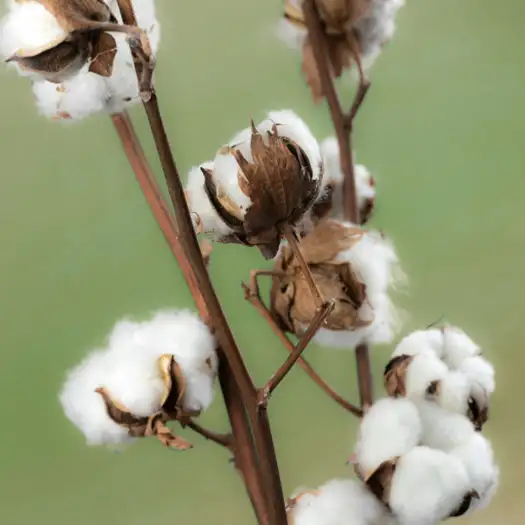
Cotton is one of the most widely used fibers in the fashion industry, taking part in the composition for approximately half of all garments produced globally. Its popularity lies in its breathability and comfort, qualities that make it ideal for everyday wear. Because it is plant-based, cotton is often thought of as the more responsible alternative to synthetic fibers. Yet natural does not mean sustainable. Its global demand has pushed production systems to prioritize speed and efficiency, often disregarding environmental sustainability, and as consumption continues, the way cotton is cultivated needs closer examination.
Water Use and Water Stress
Cotton cultivation consumes water to a great extent. During the crop growing stage, water demand varies by region, ranging between 700 and 1200 mm. In arid or semi-arid regions, irrigation becomes a critical need and a limitation, heightening the local scarcity of water. This dependency continues through manufacturing, particularly in wet processing stages such as scouring, whitening, dyeing, and finishing. According to data, producing a single cotton t-shirt requires approximately 2.700 liters of water.
Beyond water quantity, water quality is also deteriorating. Cotton agriculture is strongly associated with agrochemical use, including fertilizers and pesticides that filter into soil and are expelled into larger bodies of water. At the same time, wastewater is generated containing dyes, surfactants, and other chemicals from manufacturing processes. Without proper treatment, residues are discharged into waterways, threatening the existing local biodiversity.
“It is not possible to add pesticides to water anywhere without threatening the purity of water everywhere.” -Rachel Carson, Silent Spring
Chemical Input and Greenhouse Emissions
By 2020, cotton already had an environmental footprint of 63 Mt CO2e, with nitrogen fertilizers representing the number one driver.
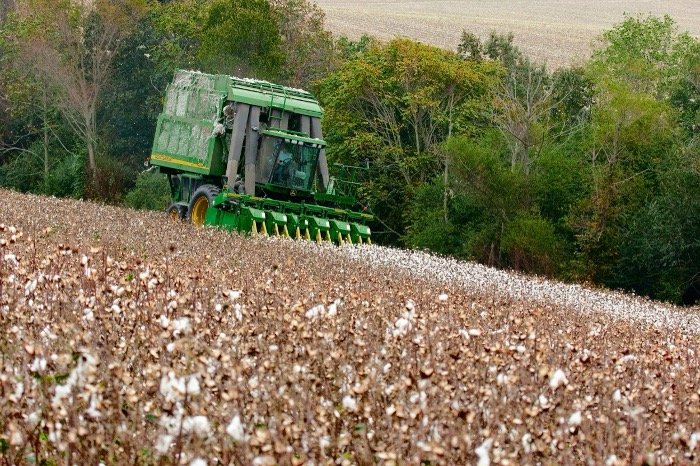
Cotton’s production involves both indirect and direct greenhouse gas emission sources. During the farm stage, emissions are mostly direct. The use of fertilizers, pesticides, herbicides, seeds, and plastic films, as well as energy inputs such as electricity and diesel for sowing, irrigation, and harvesting play a major role. Fuel combustion generates carbon dioxide (CO₂), while synthetic nitrogen fertilizers emit nitrous oxide (N₂O), two of the main gases contributing to global warming. But the issue does not stop at environmental damage, agrochemical exposure in this intensity has been directly linked to poisoning among farm workers.
Indirect emissions are the result of upstream and downstream stages from raw material extraction to textile manufacturing. The production of fertilizers for agricultural use, energy generation, transportation, and distribution across the supply chain releases additional N₂O, methane (CH₄), and CO₂, increasing cotton’s global environmental footprint.
Social & Economic Impact
The textile industry is nowhere near socially sustainable systems. Manufacturing sites are characterized by unfair and uncertain low wages, poor and unsafe working conditions, inequality and labor exploitation. Workers often have to tolerate long shifts under intense pressure, frequently without social security, healthcare or bargaining power. Despite these environments, employment continues out of economic necessity.
This states the sector’s economic imbalance: while profit is high, wages are low to keep up with low-cost garments for fast-fashion, and the burden remains on workers who endure these conditions on the production line. The high demand for textile production has accelerated industrialization in manufacturing regions, resulting in unplanned urban growth, inadequate infrastructure, and mainly noise, air, and water pollution.
How can Alternatives Change the System?
Cotton, despite being a plant-based raw material, is not fundamentally a sustainable source. While organic cotton generally has a lower environmental impact than conventional cotton, further measures can be implemented to move toward a cleaner and safer global production system.
Energy inputs are a critical concern in both farming and manufacturing. Transitioning from fossil fuels and diesel-powered machinery to renewable energy alternatives like bio-based fuels or solar-powered pumping irrigation systems, CO₂ emissions can be reduced significantly. Similarly, replacing nitrogen fertilizers with manure or other organic soil amendments can help lower N₂O emissions and additionally enhance fiber quality and crop yield.
Another widely implemented alternative is genetically modified cotton, which is largely cultivated for its increased yield efficiency and pest resistance. These characteristics make it an attractive option for farmers, as it reduces crop losses as well as pesticide, and insecticide use. However, GM cotton remains controversial because it promotes monoculture systems, reducing biodiversity and increasing dependence on seed suppliers.
Sources & Data
All environmental data are linked directly to their original reports within the article.