By Pamela Vanessa Meixueiro Aguilar
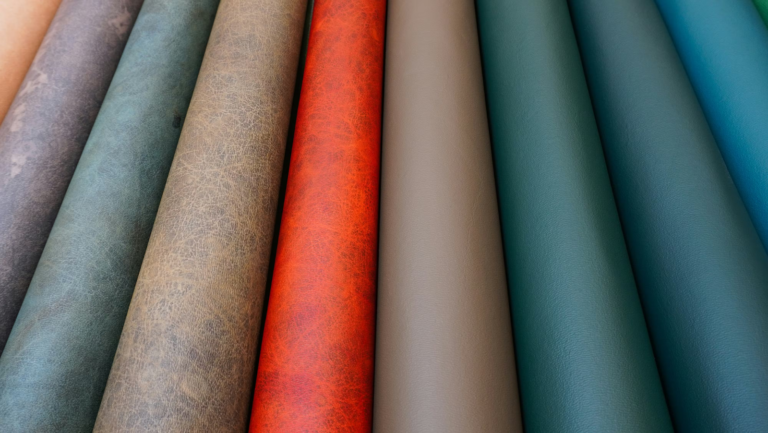
Leather is a high-value by-product of the meat industry, which is one of the largest global emitters of greenhouse gases. The leather market alone is worth approximately $400 billion, demonstrating its economic importance. However, environmental concerns are growing, highlighting issues such as animal slaughter, greenhouse gas emissions, and unsustainable production practices. Therefore, alternative materials are gaining momentum.
Animal leather is being replaced by vegan and eco-friendly substitutes that intend to reduce the environmental impact while offering similar material performance. Plant-based materials, mycelium-derived composites, collagen-based innovations, and synthetic leathers are the leading approaches being developed, but among these, Polybion takes a different approach. This company uses bacteria as its foundational component, feeding them food waste to produce a cellulose material that mimics animal leather and is being implemented in fashion.
Polybion
Polybion is a Mexican biotechnological research company founded by two brothers (Axel Gómez-Ortigoza Aguirre and Alexis Gómez-Ortigoza) in 2015 with a mission of creating revolutionary biomaterials that support the circular economy and sustainability.
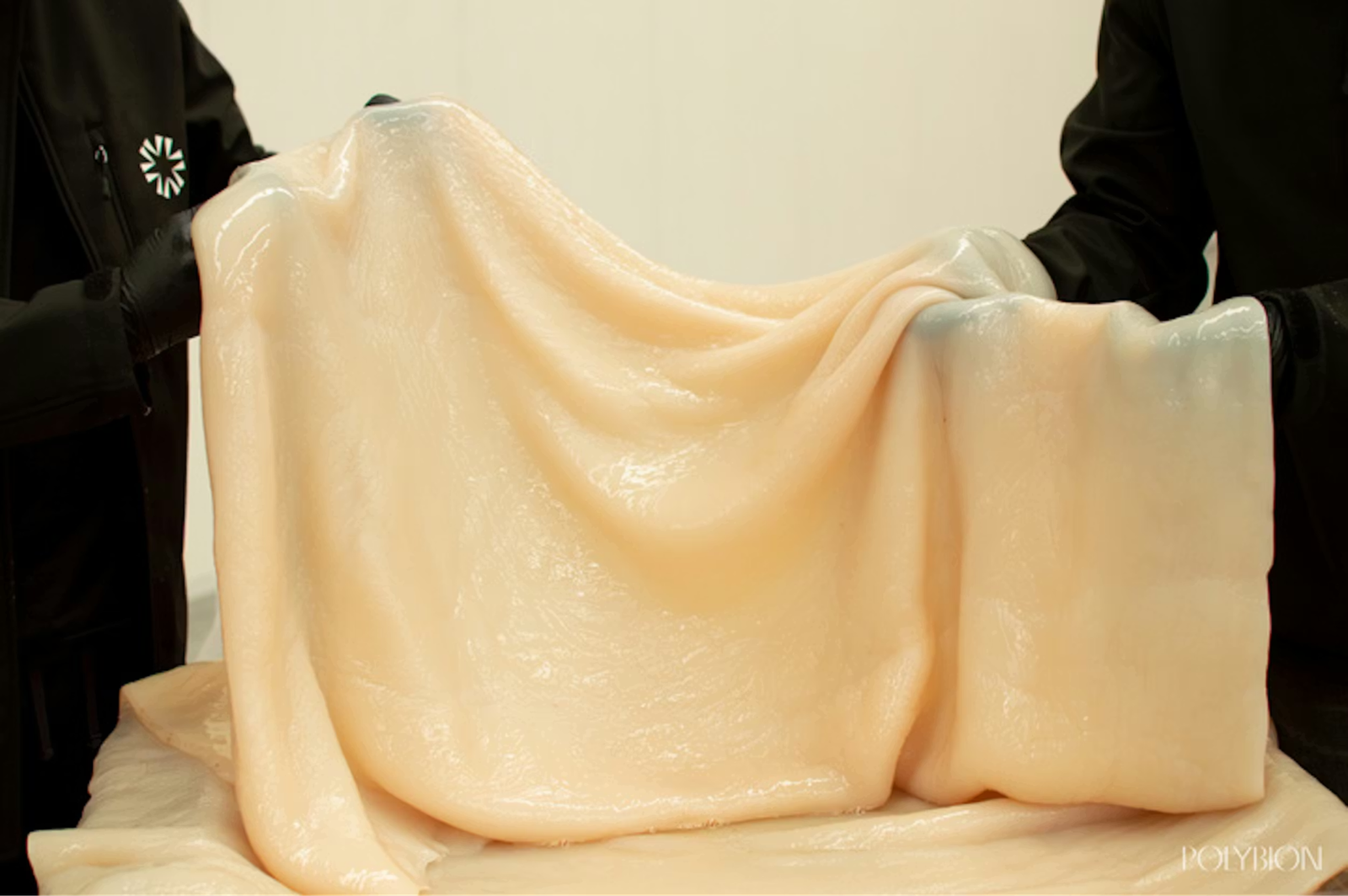
They offer a leather-like material obtained from bacteria, Celium™. Feeding the bacteria with agroindustrial fruit waste is the first step in cultivating them into a healthy, reproductive environment. Once the microorganism density is sufficient, the process continues with larger-scale fermentation and bioassembly. This approach is part of a broader biofabrication technique where 3D structures are constructed layer by layer in an automated manner using cells. Essentially, materials are grown rather than manufactured. At this stage, the material is soft but resilient and undergoes stabilization, similar to tanning for animal-based leather. Here, its inherited characteristics are refined, and the material is processed, making it more resistant to rotting. Then, a finishing process is required to perfect the color, smell, and texture, providing the essential functionality for use in fashion, footwear, sportswear, and automotive applications.
The exact environmental impact of stabilization and finishing processes is explored with the many emerging biomaterials. Traditional leather treatments are known to involve toxic chemicals and plastic-based coatings, such as chromium and formaldehyde, for tanning and processing, which can generate up to 50,000 kg of wastewater per ton of raw hide. In contrast, alternatives like Celium™ and plant-based leather aim to reduce water consumption by an estimate of 90%–95%, toxic chemicals, and energy. However, the lack of specific data on later stages of production limits the ability to critically compare the claimed improvements.
Source: Polybion
GANNI x Polybion since 2023
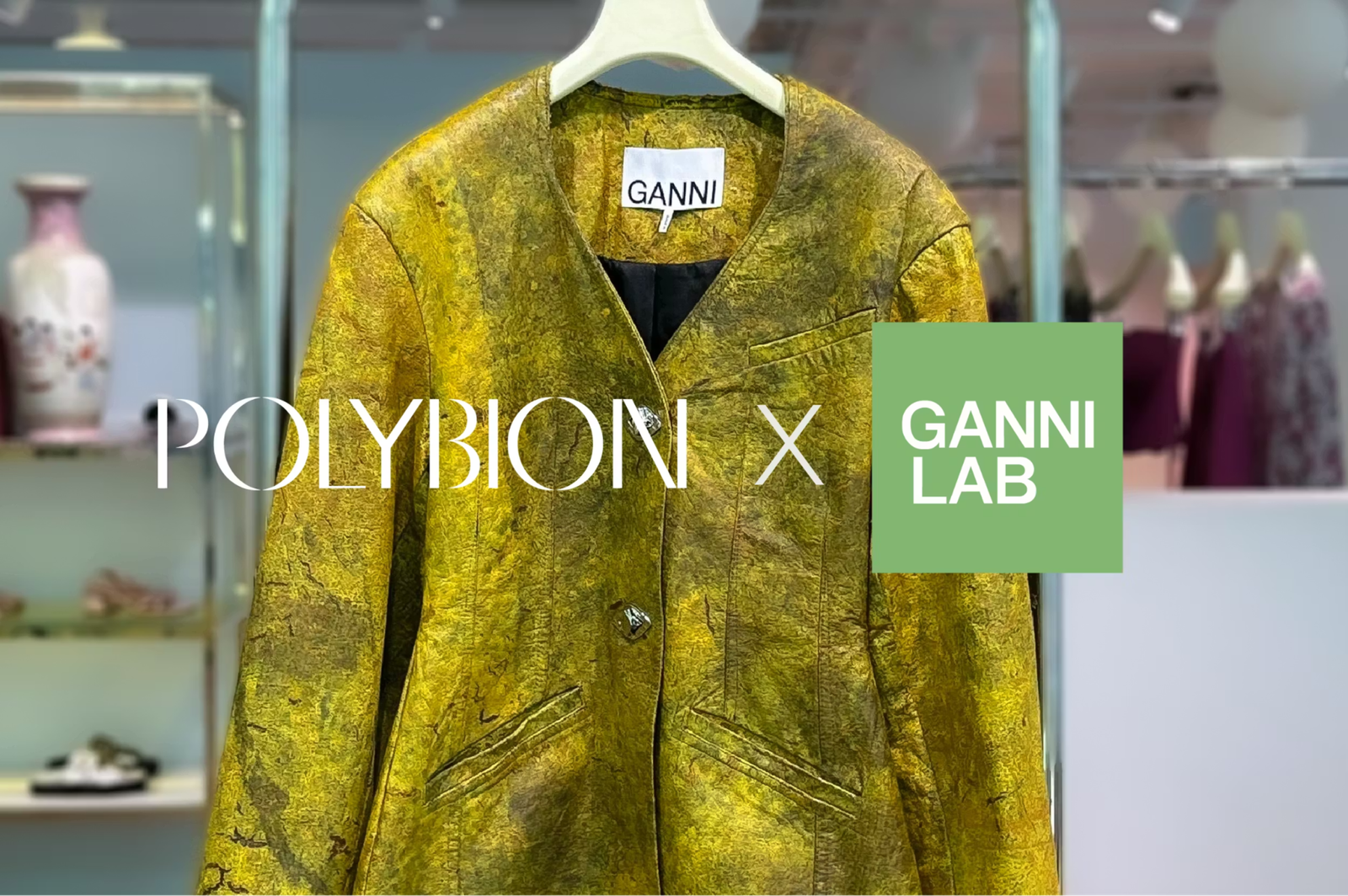
During the Global Fashion Summit 2023 in Copenhagen, the Danish fashion brand GANNI and its research & development department(Fabrics of the Future) presented, in collaboration with Polybion, a yellow blazer made from Celium™.
Source: Polybion
The partnership continued to grow, in Copenhagen Fashion Week 2024, more than one piece was crafted and displayed with GANNI´s design ethic, featuring the exquisite Celium™ textile.
Known for its vibrant, playful prints and silhouettes as well as a Scandinavian fashion aesthetic, GANNI announced a bigger collaboration with a lineup of items made from sustainable leather-like material, Celium™, for Paris Fashion Week Spring/Summer and Autumn/Winter 2025 ready-to-wear collections.
This showcased a new material and has helped promote the idea that innovative solutions for fashion sustainability can still achieve exceptional performance and appearance.
Nous Étudions x Polybion Spring/Summer 2026
Nous Étudion, the Argentine fashion house, worked hand in hand with Polybion for the first collection made exclusively from Celium™. For several months and through the design and craftsmanship process, both companies adapted to create beautiful textiles that complemented the collection. From textures and silhouettes to fabric weight and color, the original, translucent, and espumante variants of these materials were the headline of this story.

Source: Polybion
This innovative textile is disrupting the industry and making its way as a new material with its own segment in the market. Collaborating with forward-thinking brands has showcased what this material offers: aesthetics and functionality for a variety of applications from wallets and bags to clothes, shoes, and even lamps.
Polybion is leading a new narrative within fashion sustainability.
Sources & Data
All environmental data are linked directly to their original reports within the article.