By Sara Karlovic
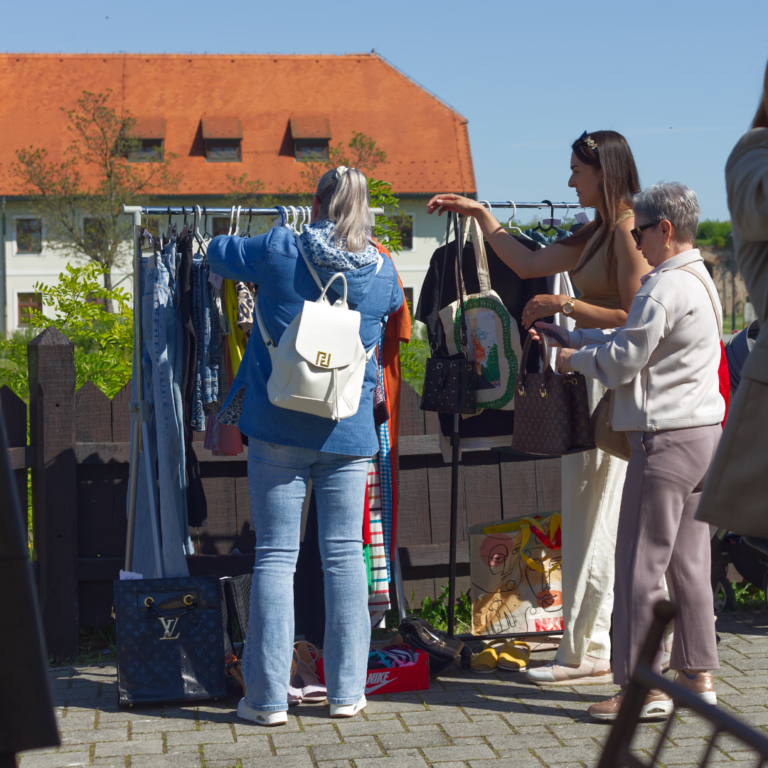
This weekend, the second-hand clothing market Broduvljak attracted visitors to the Baroque Fortress in Slavonski Brod, Croatia. The event was organised by Vedrana Jurišinac, founder of the fashion brand Dada i Dunda, whose collection Slavonika we had the honour of seeing last year during Global Sustainable Fashion Week in Budapest. This was the fourth edition of Broduvljak she has hosted so far.
Even the name Broduvljak is her own creation, combining the name of the town Slavonski Brod with the Croatian word buvljak, meaning second-hand market.
The main goal of Broduvljak is to promote sustainable fashion.
“I keep telling everyone how bad fast fashion is for the environment and for our health,” Vedrana says. “We are constantly bombarded with sales and offers, encouraged to spend beyond our means on things we don’t truly need. I decided to slow down and encourage people to look into their own closets, and then into the closets of others. Maybe there they can find something they’ve been looking for. Broduvljak was created to give new life and purpose to items that would otherwise go to waste.”
This is a message that deserves wider attention. The fashion industry uses 93 billion cubic meters of water each year, and research shows that this impact can be significantly reduced simply by extending the life of clothing by nine months.
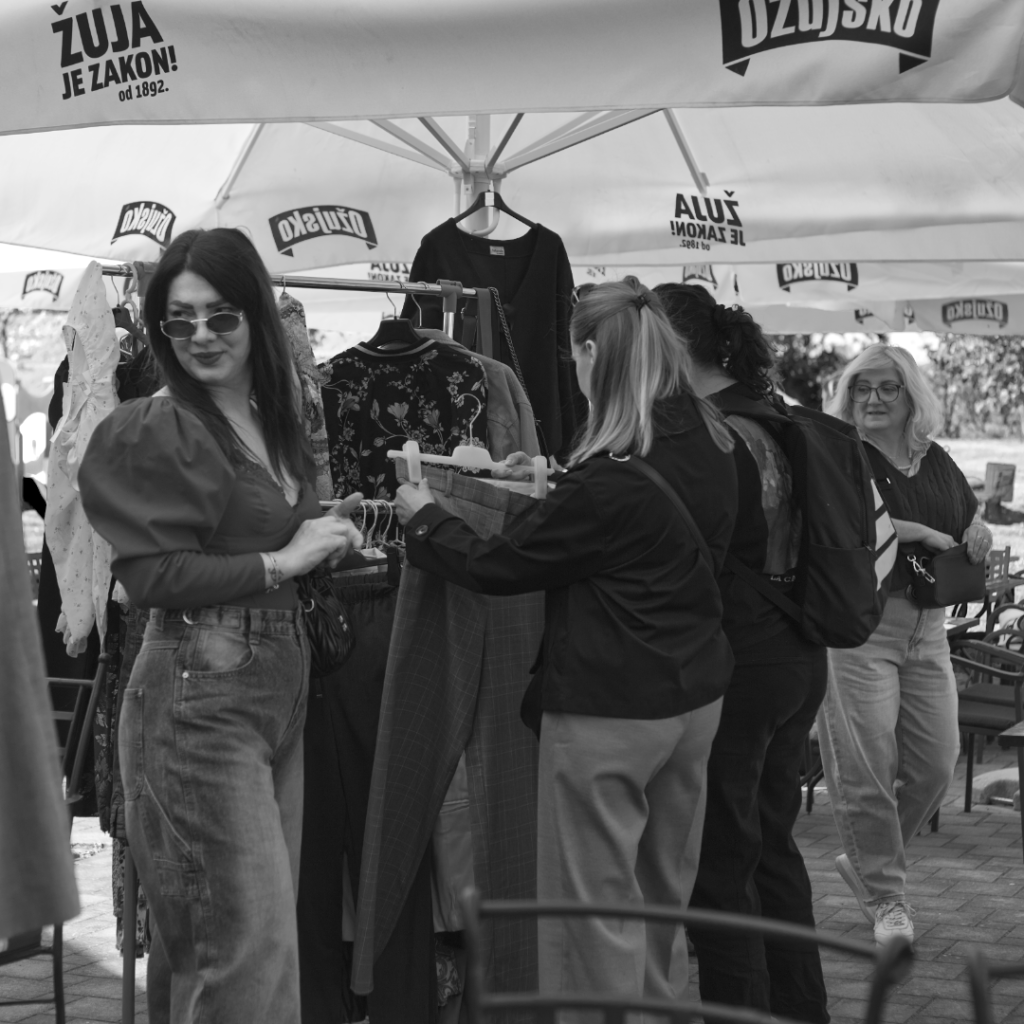
Photo: Sara Karlovic
Thrifting helps reduce textile waste, lowers demand for resource-heavy production, and cuts carbon emissions. By supporting the resale market, we also reduce the need for new clothing production, challenging the wastefulness of an industry that increasingly produces low-quality garments at high speed.
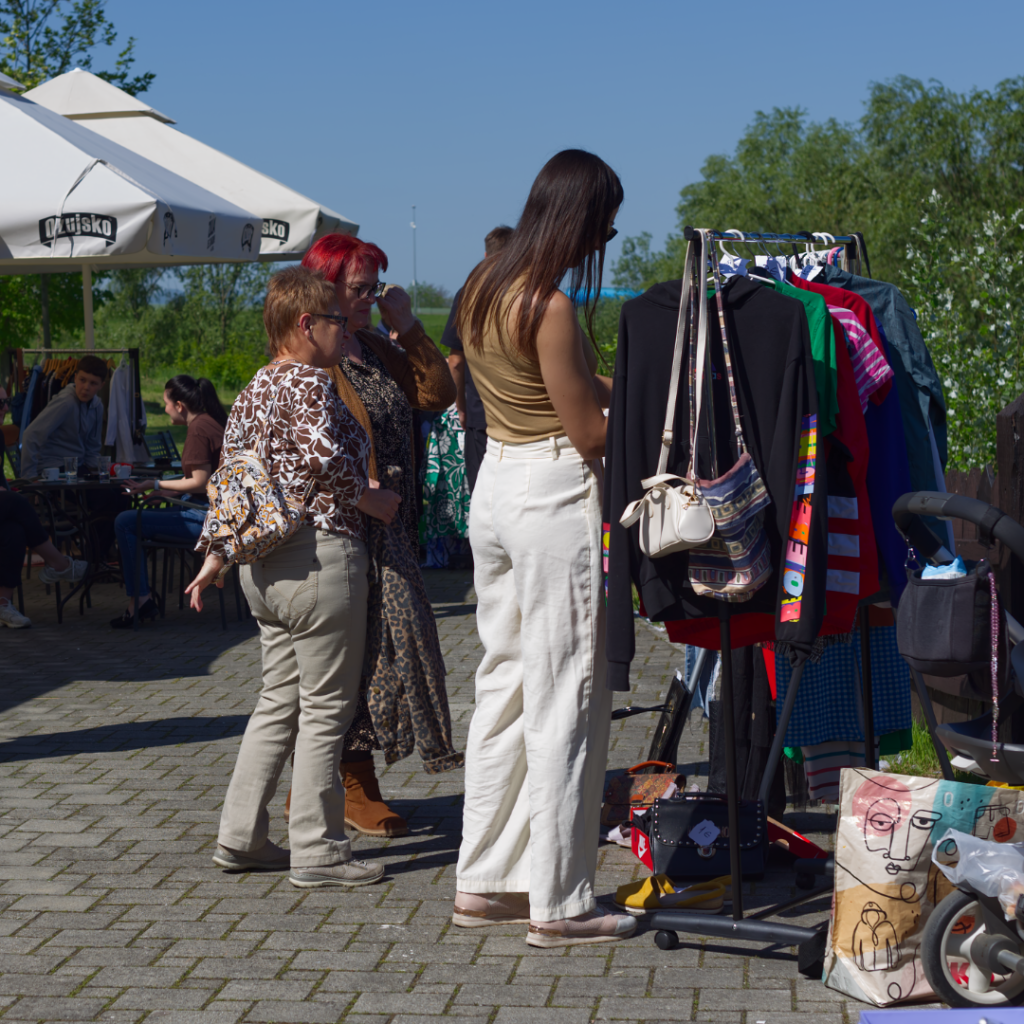
Photo: Sara Karlovic
Many of these items contain harmful chemicals and are marketed under the illusion of sustainability, often packaged in paper bags that suggest environmental responsibility while masking deeper issues.
Second-hand shopping is also more accessible for different budgets. It allows people to find quality clothing at a fraction of the original price. Many of the pieces sold at second-hand markets have lasted for years while maintaining their quality, unlike many fast-fashion items today that lose shape or colour within a short time.Broduvljak also shows that sustainable fashion can be enjoyable and social. Unlike the often-overwhelming environment of shopping malls, this event took place outdoors, allowing visitors to enjoy a spring day, browse at their own pace, and spend time with friends and family. It created a relaxed space where people could connect, explore, and engage with fashion in a more mindful way.
Photo: Sara Karlovic