By Pamela Vanessa Meixueiro Aguilar
Fashion serves as a channel for individual identity and a shared sense of community. In a cultural context, it provides insight into different societal traditions, whether through specific textiles and garment construction or their significance in rituals and everyday life. Despite that, digital documentation of fashion heritage remains limited. As AI models continue to expand, they are being increasingly used to recreate images of traditional garments. While digital tools have the potential to bring information to a broader audience, they also present obstacles. The lack of reliable and diverse data for training AI models results in imprecise representations.
Fashion and Digital Heritage
Heritage encompasses the values, artifacts, and customs passed down through generations, revealing how societies have lived and evolved. In this sense, garments and textiles become tangible artifacts that showcase craftsmanship, while their use in rituals and symbolic meanings represent the intangible aspects of cultural heritage. Together, these elements make fashion an important output for understanding the identities, beliefs, and traditions of different communities.
The digitization of cultural material has made photographs and documents more accessible for preservation, research, and education. In contrast, virtual heritage uses technologies such as 3D modeling, virtual reality, and artificial intelligence to recreate antiquities and historical environments. However, AI-generated images are only as reliable as the data used to train models. For instance, Western communities have been more extensively documented and digitized than non-Western ones. This causes AI systems to produce oversimplified depictions of underrepresented societies, promoting cultural flattening rather than authentic understanding.
Preservation and Virtual Technologies
Research conducted by Sameera M. Al-Ghamdi and Nadia Yusuf in “Digital Heritage and Fashion: Preserving Cultural Identity Through AI and Virtual Archives (2026)” examines how accurately AI models, Gemini and OpenAI´s ChatGPT-4o, can create images of traditional garments from different communities. The study included fifteen ensembles, ten from non-Western and five from Western cultures. Each AI model was provided with detailed prompts designed to produce the most precise representation possible. The resulting art was then evaluated using computational metrics and expert assessments to identify perceptual similarities between AI-generated versions and authentic garments as well as to determine whether significant features were appropriately portrayed.
Findings
Two main questions were asked for this study:
“To what extent can contemporary AI image generation tools faithfully represent the diverse visual and cultural characteristics of historical fashion? and What ethical frameworks should virtual archives adopt in this new technological paradigm?”
Findings showed that both AI models generated illustrations superficially similar to the original garments but frequently failed to represent essential features. While they capture recognizable symbols, silhouettes, and the general appearance of the garments, they often misinterpret important design elements, motifs, and traditional details. As a result, the recreations may appear convincing to untrained viewers but can provide a misleading likeness to cultural fashion heritage.
Overall, Gemini scored higher in human evaluations for some non-Western ensembles, particularly in its rendering of textures, color palettes, and garment silhouettes. On the other hand, ChatGPT-4o occasionally achieved higher scores in the computational assessment, which evaluated the overall visual composition and perceptual similarity between the generated and the reference garments.
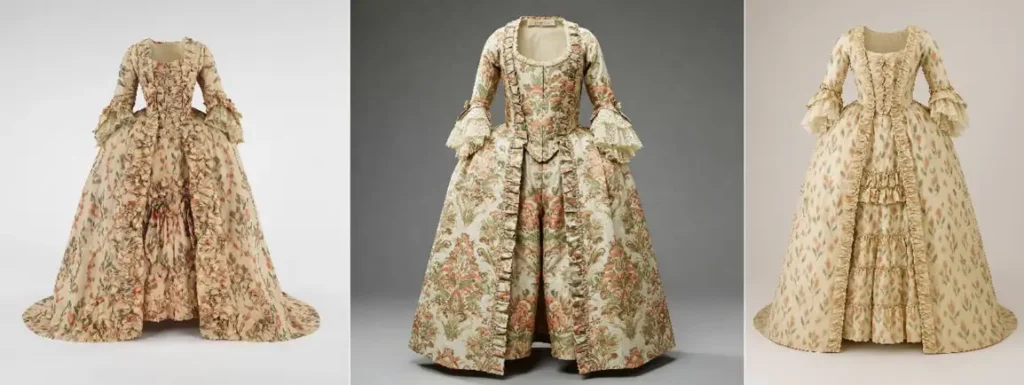
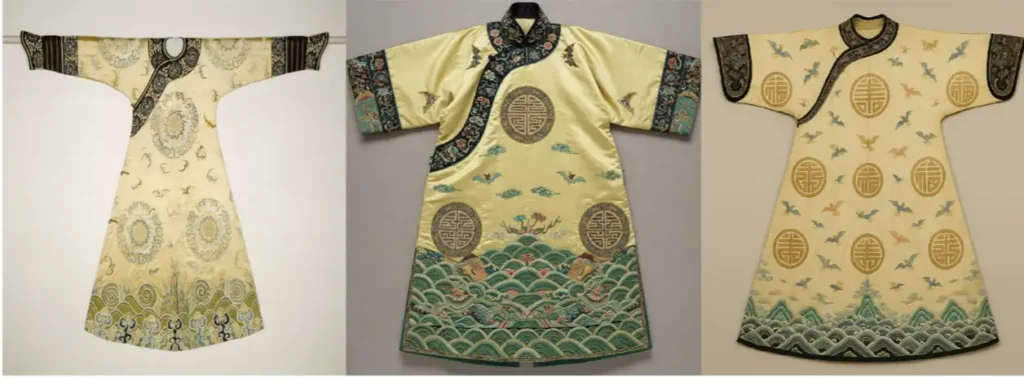
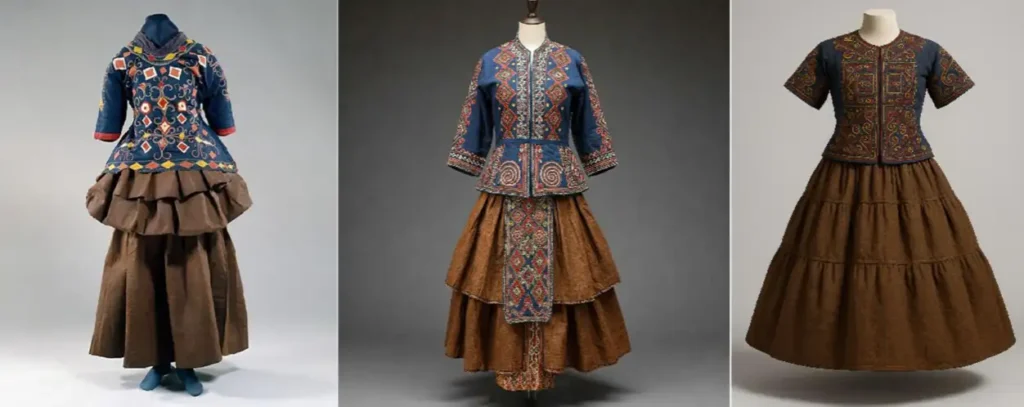
The possibility that AI in digital heritage and fashion could contribute to cultural flattening if it’s not implemented responsibly is high. The primary objective of its use is to create accurate visuals of artifacts and support education, research, and public access. The ability to reconstruct garments from historical descriptions is promising, especially when said artifacts do not exist. Nonetheless, AI models must be trained on diverse heritage-centered datasets so images look realistic and also depict historical details.
Additionally, AI-generated versions should be clearly identified as such, allowing users to understand their value as interpretive visualizations and their limitations as representations of fashion heritage. If presented as references, they may be misleading sources in future research. For this reason, transparency is essential. Responsible development, expert validation, and transparent disclosure are indispensable to ensure that AI enhances, rather than distorts, cultural understanding.
Source[1] Digital heritage and fashion: preserving cultural identity through AI and virtual archives