How Virtual Archives Are Becoming Digital Memory?
by Anushree Singh
What an artificial intelligence and virtual archives are reshaping the way we preserve fashion’s cultural identity.
Imagine discovering your grandmother’s wedding sari decades from now. The fabric has faded, its intricate embroidery has begun to unravel, and the memories attached to it exist only through family stories. Now imagine that the garment has been digitally preserved in extraordinary detail, allowing future generations to explore every motif, texture, and stitch through an interactive virtual archive. This is no longer science fiction – it is becoming part of the conversation surrounding artificial intelligence and cultural heritage.
Fashion has always been more than clothing. Every garment carries the history of its people, reflects social traditions, and preserves craftsmanship that has often taken centuries to evolve. As museums, designers, and cultural institutions embrace digital technologies, AI is emerging as a powerful tool capable of documenting and recreating historical fashion. Yet this innovation also raises an important question: can artificial intelligence truly preserve cultural identity, or can it unintentionally reshape it?
Fashion as Living History
When we think of fashion, our minds often jump to runway shows, seasonal collections, and ever-changing trends. Yet fashion has always been far more than a reflection of personal style. Across cultures and generations, clothing has served as a visual language – telling stories of identity, tradition, craftsmanship, and belonging. Every stitch, colour, and silhouette carries meaning, making garments valuable records of history rather than simply pieces of fabric.
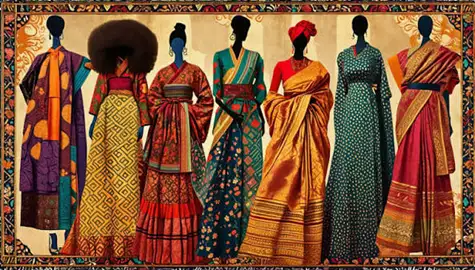
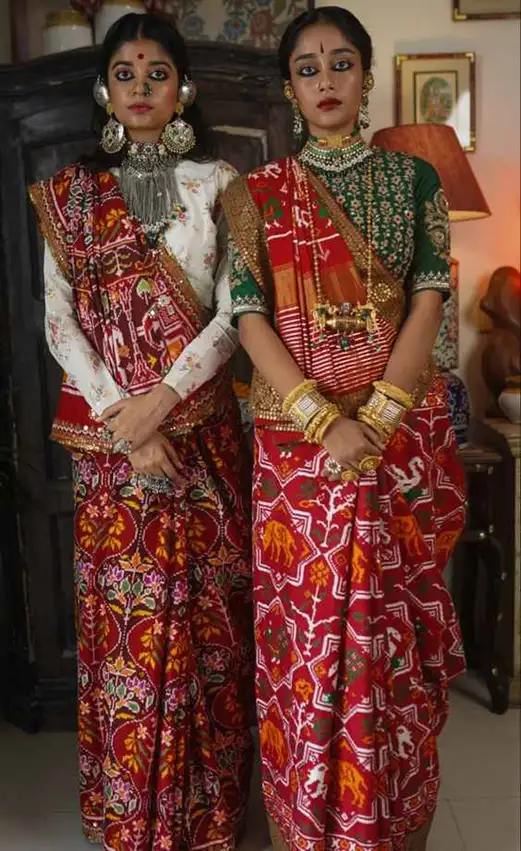
Traditional attire offers a window into the lives of the communities that created and wore it. The Indian Patola sari, renowned for its intricate double-ikat weaving technique, represents centuries of artisanal skill and is deeply associated with ceremonial occasions and cultural pride. Likewise, the Japanese Kimono is more than a beautifully crafted robe; its patterns, colours, and style often reflect the wearer’s age, social status, the changing seasons, or the nature of a special event.
Across North Africa, the Moroccan Kaftan showcases exquisite embroidery and luxurious textiles that reflect regional artistry while symbolising elegance and celebration. In China, ceremonial robes from the Qing Dynasty were carefully designed with imperial colours and symbolic motifs, such as dragons, clouds, or longevity symbols, each carrying specific cultural and historical significance. These garments were not simply decorative- they communicated authority, social hierarchy, and spiritual beliefs.
Such examples remind us that fashion is both tangible and intangible heritage. The garment itself represents a physical artefact, but the traditions behind its creation-the weaving techniques, embroidery methods, symbolic motifs, rituals, and stories passed down through generations-form an equally important part of its cultural value. Preserving fashion, therefore, means protecting not only what people wore but also the identities, knowledge, and histories woven into every thread.
As the fashion industry embraces digital innovation, recognising this deeper cultural significance becomes increasingly important. Any technology used to preserve historical garments must strive to protect not only their appearance but also the stories and traditions that give them meaning.

AI: Preserving Fashion for Future Generations
As technology continues to transfor[th1] m the fashion industry, artificial intelligence is emerging as a powerful ally in preserving cultural heritage. For museums, researchers, and historians, AI offers exciting possibilities that were unimaginable just a decade ago.
One of its greatest strengths lies in the ability to digitally reconstruct garments that have been damaged by time or are too fragile to be displayed. By analysing archival photographs, sketches, and historical records, AI can generate detailed visual recreations that help preserve pieces of history which might otherwise be lost forever.
Museums are also embracing AI to digitise their collections and create virtual archives. Instead of limiting access to visitors who can physically enter an exhibition, institutions can now make centuries-old garments available to audiences across the world. Interactive digital collections allow students, designers, and researchers to examine clothing in remarkable detail, encouraging greater appreciation for traditional craftsmanship and cultural heritage.
Beyond preservation, AI has become a valuable educational tool. Virtual exhibitions and AI-generated visualisations can recreate historical fashion in immersive ways, helping learners understand how garments were worn, constructed, and interpreted within their cultural contexts. For researchers, these technologies make it easier to visualise incomplete or lost fashion pieces using historical descriptions and surviving references, opening new opportunities for studying costume history and textile traditions.
However, while AI excels at recreating the appearance of historical garments, preserving their cultural authenticity remains a far more complex challenge.
Recent research found that AI-generated fashion images were often visually convincing at first glance, successfully capturing the overall silhouette, colour palette, and structure of historical clothing. Yet beneath this realism, important cultural details were frequently overlooked or inaccurately represented. Symbolic embroidery, traditional weaving techniques, handcrafted textures, and culturally significant motifs were often simplified, altered, or replaced with more generic patterns.
This distinction is significant because traditional garments communicate far more than aesthetic beauty. A particular embroidery pattern may represent a family’s heritage, a ceremonial occasion, or a community’s beliefs. Likewise, weaving techniques and decorative motifs often reflect centuries of craftsmanship passed down through generations. When these elements are inaccurately reproduced, the garment may still look beautiful, but it no longer tells the same story.
The study highlights this concern through examples such as Indonesian traditional attire, where AI struggled to reproduce authentic batik textures and culturally distinctive motifs, instead generating a more generic interpretation of Southeast Asian clothing. Similarly, ceremonial robes from Qing Dynasty China retained their overall colour and silhouette but failed to accurately depict several symbolic patterns that were essential to their historical and cultural significance.
Why Authenticity Matters
As artificial intelligence becomes more involved in documenting and recreating historical fashion, one question becomes increasingly important: How authentic are these digital representations? While an AI-generated garment may appear visually accurate, authenticity goes beyond colours, silhouettes, and decorative details. It also includes the stories, traditions, craftsmanship, and cultural meanings that have been woven into every piece over generations.
One of the most significant concerns raised by recent research is the idea of “cultural flattening.” Simply put, cultural flattening occurs when AI unintentionally reduces the richness and uniqueness of different cultures by producing images that look convincing but lack their authentic identity. Rather than recognising the subtle differences between traditional garments from different regions, AI may blend them into a single, generic aesthetic.
Imagine asking AI to recreate a ceremonial robe from China, a handcrafted Indonesian ensemble, or a traditional Moroccan kaftan. At first glance, the generated images might appear historically accurate. However, a closer look often reveals missing embroidery patterns, altered textile techniques, or symbolic motifs that have been replaced with decorative designs that simply “look right.” The result is a garment that is visually appealing but culturally incomplete.
This distinction matters because traditional clothing is never just about appearance. Every embroidered pattern, woven texture, colour combination, and handcrafted detail reflects the history, beliefs, and identity of the community that created it. When these meaningful elements are replaced with generic patterns, AI does more than make a technical mistake, it risks changing how future generations understand that culture.
The research highlights that AI frequently achieved impressive visual realism while struggling to accurately reproduce culturally significant features, particularly in less-documented non-Western garments. This creates a serious challenge: people unfamiliar with these traditions may accept AI-generated images as authentic historical representations, even when important cultural details have been lost or altered.
As AI-generated content becomes increasingly common across museums, educational platforms, and digital archives, authenticity must remain a priority. Technology has the power to make cultural heritage more accessible than ever before, but accessibility should never come at the cost of accuracy. Preserving fashion means preserving its stories, symbolism, and cultural identity, not simply creating beautiful digital replicas.

Preserving the Past, Responsibly
Artificial intelligence is transforming how we document, restore and experience fashion heritage. Its ability to recreate historical garments opens exciting opportunities for education, research and accessibility. However, technology alone cannot preserve culture. Heritage lives in stories, craftsmanship and the communities that continue these traditions.
The future of digital fashion preservation will therefore depend not on replacing human knowledge with artificial intelligence, but on combining technological innovation with cultural expertise. When used responsibly, AI can become a valuable partner in protecting fashion’s rich and diverse legacy rather than unintentionally rewriting it.
Source
Research conducted by Sameera M. Al-Ghamdi and Nadia Yusuf in “Digital Heritage and Fashion: Preserving Cultural Identity Through AI and Virtual Archives (2026)”