By Anushree Singh
What If Your Clothes Could Grow Instead of Being Manufactured
Walk into your wardrobe ten years from now, and the labels on your clothes might tell a very different story. Your jacket may not be crafted from animal leather but grown from mushrooms. The soft blouse you reach for could have begun as discarded orange peels, while your favourite handbag might owe its existence to pineapple leaves that would once have been left behind as agricultural waste. What sounds like a glimpse into science fiction is, in many ways, already becoming reality.
For decades, the fashion industry has relied on familiar materials like cotton, polyester, and leather. These fabrics have shaped global fashion, but they have also revealed significant environmental challenges, from intensive water use and fossil fuel dependence to textile waste and pollution. As conversations around sustainability continue to reshape the industry, designers, scientists, and innovators are asking an exciting question: What if the materials themselves could become part of the solution?
Across research laboratories, textile studios, and innovative start-ups around the world, a new generation of fabrics is beginning to emerge. Some are created from agricultural by-products that would otherwise go to waste, while others are cultivated through biotechnology or inspired by nature’s own remarkable processes. Rather than simply replacing traditional materials, these innovations encourage us to rethink how clothing is designed, produced, and valued.
The future of fashion may not be defined only by new silhouettes or seasonal trends. Instead, it may begin with something far more fundamental, the very fibres that touch our skin every day. As sustainable materials continue to evolve, they offer a glimpse of a fashion industry where creativity and environmental responsibility can grow side by side.
Why Fashion Needs New Materials
The Cost of Traditional Fabrics
Cotton
- Uses large amounts of water.
- Heavy pesticide uses in many regions.
Polyester
- Made from fossil fuels.
- Sheds microplastics during washing.
Leather
- Requires livestock and resource-intensive processing.
- Conventional tanning can have significant environmental impacts if not managed responsibly.
Fashion isn’t just changing because people want new trends.
It’s changing because the materials, we’ve depended on for decades are placing increasing pressure on natural resources and ecosystems.
Designers are no longer asking, “What looks good?” They’re also asking, “What leaves the smallest footprint?”
Meet the Materials of Tomorrow
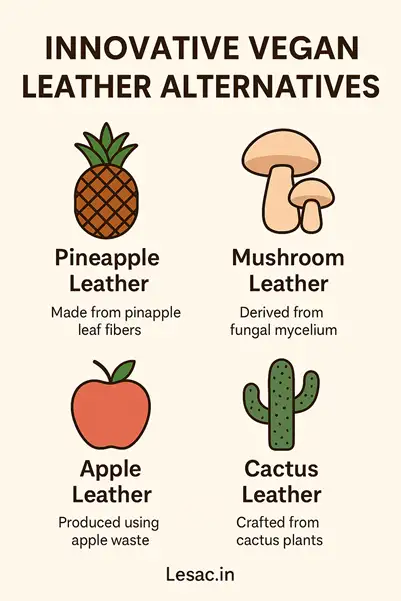
1. Mushroom Leather 🍄
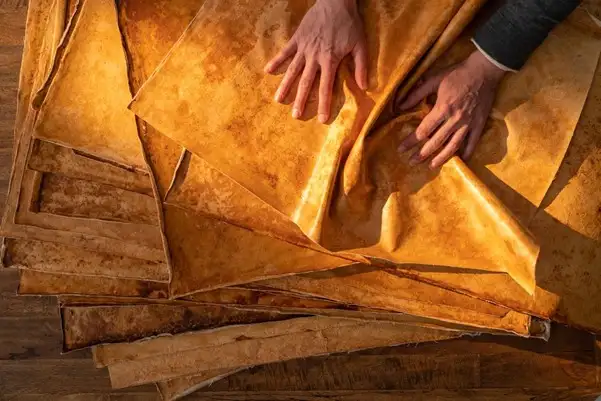
One of the most exciting developments in sustainable fashion is mushroom leather, a material grown from mycelium, the root-like network of fungi. Unlike traditional leather, which requires years of livestock farming and resource-intensive processing, mycelium can be cultivated in controlled environments within just a few weeks.
The resulting material has a leather-like appearance and texture, making it suitable for products such as handbags, footwear, and accessories. While formulations vary between manufacturers, some mycelium-based materials are also biodegradable, offering an encouraging glimpse into how biotechnology could reshape the future of fashion.
Instead of requiring years of livestock farming, some mycelium-based materials can be grown in just a few weeks.
2. Pineapple Fibre (Piñatex) 🍍
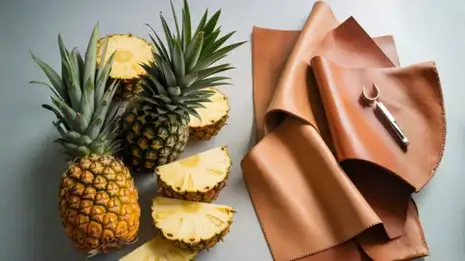
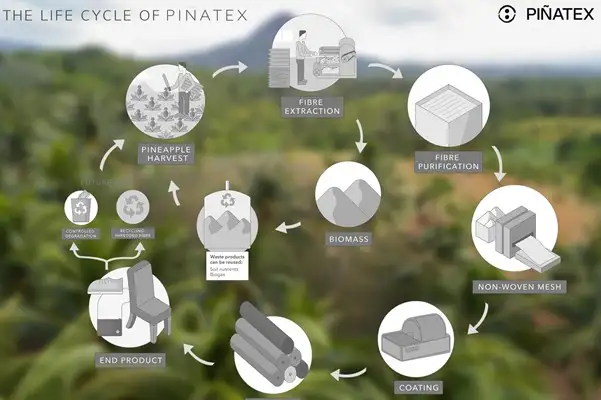
Piñatex demonstrates how agricultural waste can be transformed into a valuable fashion material. Instead of discarding pineapple leaves after harvest, farmers can supply them for fibre extraction, creating an additional source of income while reducing waste.
The material has already been used by several international fashion brands for shoes, handbags, and accessories, proving that innovative textiles can combine functionality with a more circular approach to production.
Instead of being discarded or burned after harvest, pineapple leaves can be transformed into a durable textile for fashion products.
More Materials Changing Fashion
Innovation extends far beyond mushrooms and pineapple leaves. Researchers and designers are exploring a wide range of natural resources that could reduce fashion’s environmental footprint.
Orange Peel Fabric 🍊
Developed from by-products of the citrus industry, Orange Fiber transforms food waste into a lightweight, silk-like textile, giving discarded orange peels a valuable second life.
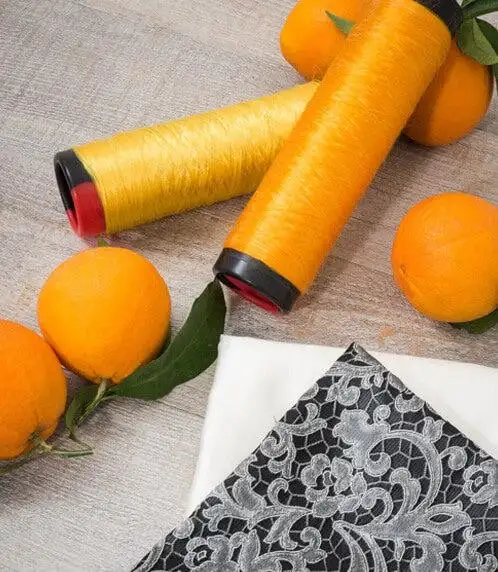
Seaweed Textiles 🌊
Seaweed is a fast-growing renewable resource that requires no freshwater or agricultural land to cultivate. Scientists continue to explore its potential for creating biodegradable fibres and garments with a lower environmental impact.
Hemp 🌾
Hemp has been used for centuries, yet it is experiencing renewed interest thanks to its durability, relatively low water requirements, and ability to grow with fewer pesticides than conventional cotton.
Bamboo 🎍
Bamboo grows rapidly and regenerates naturally, making it an attractive renewable resource. However, its environmental performance depends largely on the manufacturing process, highlighting the importance of looking beyond raw materials alone when evaluating sustainability.
Innovation Comes with Challenges
At first glance, these next-generation materials seem like the perfect answer to fashion’s environmental challenges. They promise lower carbon emissions, reduced waste, and a future less dependent on finite resources. However, as with any innovation, the reality is more nuanced.
Many of these materials are still in the early stages of development. Producing mushroom leather, seaweed textiles, or bio fabricated fibres on a global scale requires advanced technology, specialised facilities, and significant investment. As a result, these materials are often more expensive than conventional fabrics, making them less accessible for many brands and consumers.
Another challenge lies in transparency. While terms such as plant-based, vegan, or eco-friendly have become increasingly popular, they do not always tell the whole story. Some alternative leathers, for example, still rely on synthetic coatings or plastic-based binders to improve durability. Although they may use fewer animal products, they are not always fully biodegradable or free from fossil-fuel-derived materials.
Several leading fashion brands have already begun experimenting with next-generation materials. Stella McCartney has become one of the industry’s strongest advocates for sustainable innovation, exploring mushroom-based leather alternatives in collaboration with biotechnology companies. Piñatex has appeared in collections by brands including Hugo Boss and H&M, demonstrating that agricultural waste can be transformed into commercially viable fashion products. Meanwhile, Orange Fiber has collaborated with Salvatore Ferragamo to create luxury garments made from citrus by-products, illustrating how food waste can be reimagined as a premium textile.
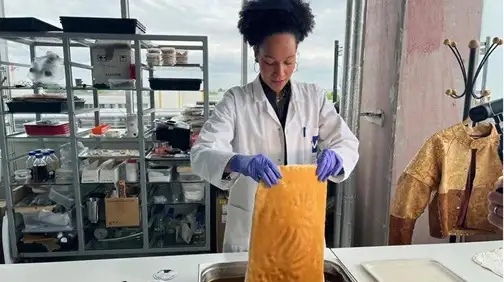
The future of fashion doesn’t begin on the runway. It begins with the choices we make, one fibre, one garment, and one innovation at a time.
Across the industry, designers and brands are embracing circular fashion, where clothing is created with longevity in mind rather than short-lived trends. Garments are being designed to be repaired instead of discarded, recycled into new fibres instead of ending up in landfills, and even rented or resold to extend their life. Technology is also playing an important role, helping manufacturers reduce waste, improve production efficiency, and better understand consumer demand.
At the heart of this transformation is a simple but powerful idea: sustainability is no longer an afterthought; it is becoming a foundation for creativity and innovation. The next generation of fashion will be defined not only by beautiful designs but also by thoughtful choices that respect people, resources, and the environment.
The label on tomorrow’s clothing may tell a story unlike any we’ve seen before, a jacket grown from mushroom mycelium, a handbag crafted from pineapple leaves, or a dress woven from fibres once considered waste. These innovations remind us that sustainability is not only about reducing harm; it is about reimagining what is possible.
The future of fashion is unlikely to be shaped by a single breakthrough material. Instead, it will emerge through hundreds of innovations, each contributing to a more responsible way of designing, producing, and consuming clothing.
Whether these materials become mainstream or remain niche alternatives, they have already achieved something important: they have changed the conversation. Fashion is no longer judged solely by aesthetics, trends, or craftsmanship. Increasingly, consumers also want to understand where a garment comes from, what it is made of, and the impact it leaves behind.
Perhaps the most exciting part is that this transformation is only beginning. As science, creativity, and sustainability continue to intersect, tomorrow’s wardrobe may look very different from today’s, not only in style, but in the remarkable stories woven into every fibre.
References
- UN Environment Programme (UNEP). Sustainability and Fashion. https://www.unep.org/
- Ellen MacArthur Foundation. Fashion and the Circular Economy. https://www.ellenmacarthurfoundation.org/
- Textile Exchange. https://textileexchange.org/
- Jones, M., Gandia, A., John, S., & Bismarck, A. (2021). Leather-like material biofabrication using fungi. Nature Sustainability.
- Strgačić, S., & Krpan, P. (2022). Innovative Sustainable Fashion Materials from Mushroom Mycelium. Tekstil, 71(3), 185–194.
- Fungal mycelium as leather alternative: A sustainable biogenic material for the fashion industry. Sustainable Materials and Technologies (2023).
- Ananas Anam. Piñatex. https://www.ananas-anam.com/
- Orange Fiber. https://orangefiber.it/
- AlgiKnit. https://www.algiknit.com/
- Canopy. Next Generation Fibres Report. https://canopyplanet.org/
- Stella McCartney sustainability initiatives. https://www.stellamccartney.com/