By Nadine Mneimneh
The Organisation for Economic Co-operation and Development (OECD) is an international organisation that works with governments, businesses, and civil society to promote responsible economic growth, sustainable development, and improved social and environmental standards worldwide.
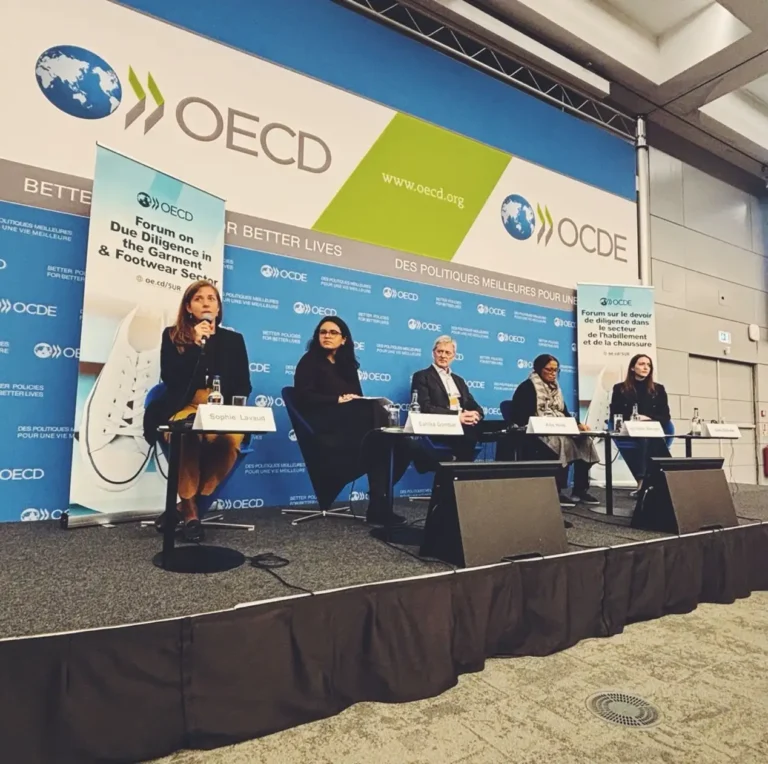
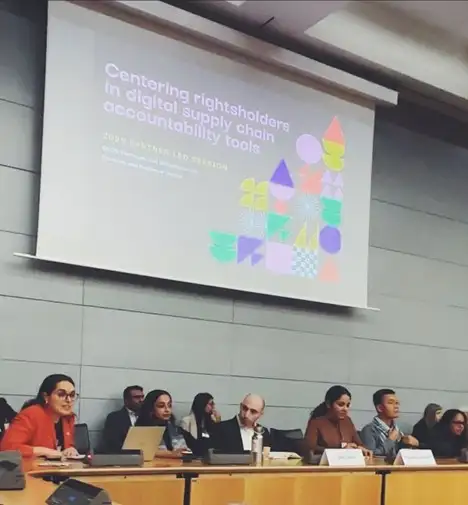
Within this mandate, the OECD developed guidance to help companies identify, prevent, and address risks in their global supply chains. Held on February 11th and 12th 2026, The OECD Forum on Due Diligence in the Garment and Footwear Sector brought together brands, manufacturers, governments, trade unions, civil society organisations, and experts to discuss how these principles can be implemented in practice.
Over two days of discussions, a consistent message emerged: meaningful progress in the garment and footwear sector depends on trust, worker voice, and long-term commitments grounded in fundamental rights to safe and decent working conditions.
Below are key reflections from the discussions
Grievance mechanisms are fundamental safeguards
Grievance mechanisms were a recurring theme throughout the forum. A grievance mechanism is a formal process that allows workers, communities, or other stakeholders to safely raise concerns about workplace issues, human rights risks, or harmful business practices.
These systems must be understood as core safeguards, not simply compliance tools.
For grievance mechanisms to function effectively, workers must be able to speak up safely and without fear of retaliation. Without trust, these systems remain ineffective in practice. Building credibility requires accessibility, transparency, and a genuine commitment to resolving concerns.
Worker voice must be embedded in decision-making
Unions and worker representatives were consistently identified as central actors in due diligence processes.
They are both stakeholders and rights-holders whose perspectives should be embedded in:
- Decision-making processes
- The design of grievance mechanisms
- The development of workplace policies
This aligns with the fundamental right to freedom of association and collective bargaining, which is essential for achieving safe and decent working conditions. When workers participate directly in shaping the systems intended to protect them, those systems become more legitimate and effective.
AI can support — but not replace — human connection
Technology, including AI-enabled grievance tools, is increasingly part of the conversation. These tools can support the design and accessibility of reporting systems, but they cannot replace human interaction.
This is particularly important in gender-sensitive situations, where trust and empathy are essential. Workers should not bear the burden of accessing reporting systems, such as purchasing smartphones or paying for data plans. Unions remain essential in amplifying worker voices and helping shape effective practices.
Homeworkers and informal workers must be included
A critical priority highlighted during the forum was the inclusion of homeworkers and informal workers in due diligence efforts.
Their realities often include:
- Exposure to heat stress
- Pressure from unmet productivity targets
- Limited protection and visibility
These workers require the same attention and safeguards as factory-based employees to ensure their fundamental right to safe and healt[NM1] hy working conditions.
Factories need safe communication channels with brands
Due diligence must operate in both directions. Factories also require protected and structured channels to raise concerns with brands without fear of retaliation.
Transparent communication across the value chain is essential to prevent risks from escalating. Factories also need long-term and stable commitments from brands to enable investment in climate adaptation and operational improvements.
Climate change is a labor and human rights issue
One of the most powerful themes throughout the forum was the intersection of climate and labor.
Climate change is not only an environmental issue; it is also a human and labor rights issue.
In many garment-producing regions, workplace heat is already reaching dangerous levels. According to occupational health guidance, temperatures above 30°C (86°F) can significantly reduce safe work capacity, while 35°C (95°F) and above can pose serious health risks, especially when combined with high humidity and physically demanding work.
During one session, an audience member described heat stress as a “death trap.” The phrase captured the growing risks workers face due to rising temperatures, high humidity, flooding, and unsafe living conditions linked to inadequate infrastructure.
Decent working conditions — including safe temperatures, rest breaks, hydration, and climate-resilient infrastructure — must sit alongside brands’ Scope 3 discussions, not behind them.
Final reflections
The forum reinforced a central message: effective due diligence relies on trust, worker participation, and long-term commitment grounded in fundamental rights.
Protecting workers, strengthening communication across supply chains, and addressing climate risks are deeply interconnected priorities that must progress together.
You can watch recordings from previous editions of the OECD Forum on Due Diligence in the Garment and Footwear sector on the OECD YouTube channel: https://www.youtube.com/oecd